Skip to the page

Sections through the continent. Filed from Denver. Corrections are dated, never silent.

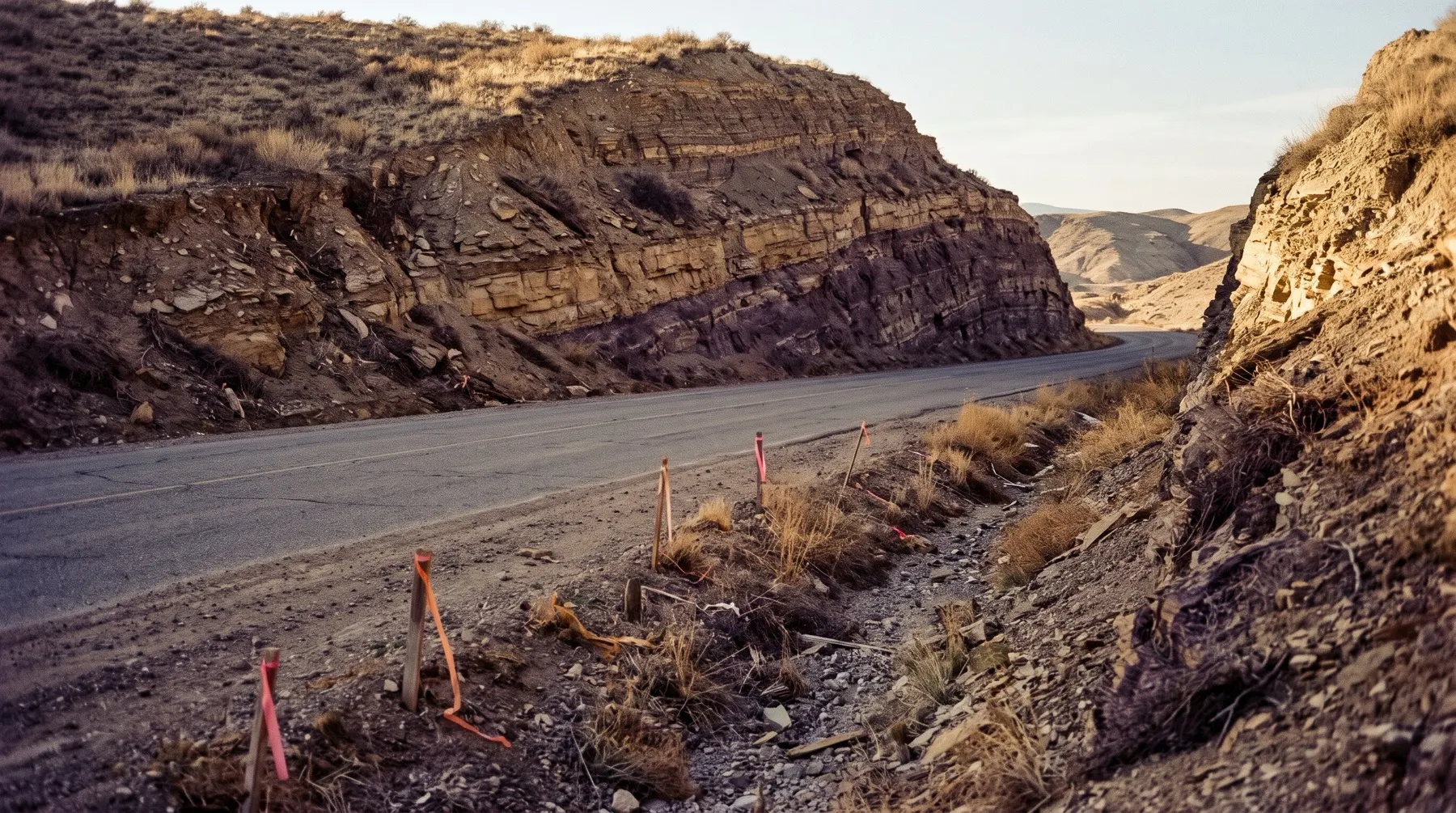
A road cut through a dry hillside at late afternoon, horizontal rock layers exposed above the shoulder, survey stakes with pink flagging along the gravel
Cut 001, Front Range. The pale seam is bentonite. The dark band above it is a shale the county still calls by its 1972 lease name.

The standing cut

The continent, read in section.

Most reporting stops where a story is loudest: a gate, a queue, a price that moved overnight. This desk starts there and goes down. Under the gate is a permit. Under the permit is a statute, a treaty article, or a compact signed before anyone now working the gate was born.

Filed from Denver. Four beats. One filing key.

Layer key

Measured from the surface down

Three layers, and the one a story belongs to

A closure at a crossing is easy to photograph and hard to explain. The explanation is almost never in the closure notice. It sits one layer down, in a renewal calendar, or two layers down, in a clause about consultation that nobody reads until a governor sues.

Surface
0 to 4 mA lane closed, a queue four hours long, a fee raised on Monday morning.Decided by the port authority or district office on duty.Filed in daily operational bulletins, gate notices, customs circulars.
Terrace
4 to 18 mA permit that has to be renewed each season. A quota that resets in October.Decided by regional commissions and customs districts.Filed in permit registers, tariff schedules, hearing dockets.
Bedrock
18 m and belowA treaty article, a water compact, a statute that has not been touched in decades.Decided by legislatures, courts, standing commissions.Filed in treaty texts, session laws, reported opinions.

The desk's working rule is blunt. Name the layer inside the first four paragraphs. A story that cannot be placed on the key has not been read yet, and it does not go into the file.

Ground the desk works

Eleven crossings, four districts, one river basin

Border formalities

Inspection lanes, enrolment appointments, visa reciprocity, the gap between a rule as published and a rule as practiced at the booth. The desk keeps the bulletin and the booth log side by side, because the two disagree more often than either office admits.

Freight corridors

Rail gauge, axle weight, seasonal closures, barge draft. A corridor is a promise about time, and every promise has a document behind it: a maintenance schedule, a trackage agreement, a port lease with a renewal date nobody put on the calendar.

Water and power

Compacts allocate river water by acre-foot and by priority date. Transmission queues allocate capacity by position and by deposit. Both systems reward whoever filed first, which is why the desk reads filing stamps as closely as it reads the minutes.

Standing bodies

Commissions, tribunals, joint boards. Some meet twice a year and decide quietly. Others meet monthly and decide nothing. Membership terms, quorum rules and the place where minutes are posted tell you which kind of body you are dealing with before the first vote.

From the desk

November 9, 2026

What a quiet week looks like on a cut

Three of the four beats produced nothing that would pass for news this week. No closure, no ruling, no price shock. That is a normal week, and it is the week when the desk does its most useful reading: renewal calendars for next season, draft minutes posted before approval, and the annual reports that agencies publish in the same quiet window every year.

A story that only makes sense during a crisis is not reporting. It is weather. The desk would rather publish the calendar in September than explain the queue in January.

Words the desk uses precisely

Working vocabulary, not jargon

Cut face
The exposed edge of a section, where every layer is visible at once. On this site, a story told with its surface, terrace and bedrock in view.
Terrace
The working layer of permits, quotas and schedules. It moves every season, which is why it produces most of the news that looks sudden.
Bedrock
Statute, treaty and compact. Slow to change, expensive to challenge, and usually the reason a surface fix does not hold.
Filing
The act of putting a document where the public can find it, with a stamp and a date. The desk treats the stamp as evidence.
Standing body
A commission or board that exists whether or not it is in the news. Its minutes are the closest thing to a continuous record.
Tolerance
The amount of variation a rule allows before enforcement changes. Most disputes are about tolerance, not about the rule itself.
The full glossary, with document examples

Before filing

How a claim is checked

  1. The primary document is opened, not summarized from a press release. If the document is a scan, the page number is recorded.
  2. The date on the document is compared with the date in the announcement. Where they differ, both appear in the story.
  3. The layer is named. A claim about enforcement is checked against the operating bulletin, not against the statute.
  4. A second reader checks every figure against the page it came from, and notes the arithmetic on the draft.
  5. Corrections are attached to the item with a date. Silent edits are treated as a failure of the filing, not as housekeeping.

Send the desk a document, not a tip

Filings, recordings of public meetings, and page references are read first. The desk answers within five working days, and says so when it cannot.

Contact the desk