Reading key
Every story gets cut open before it gets written
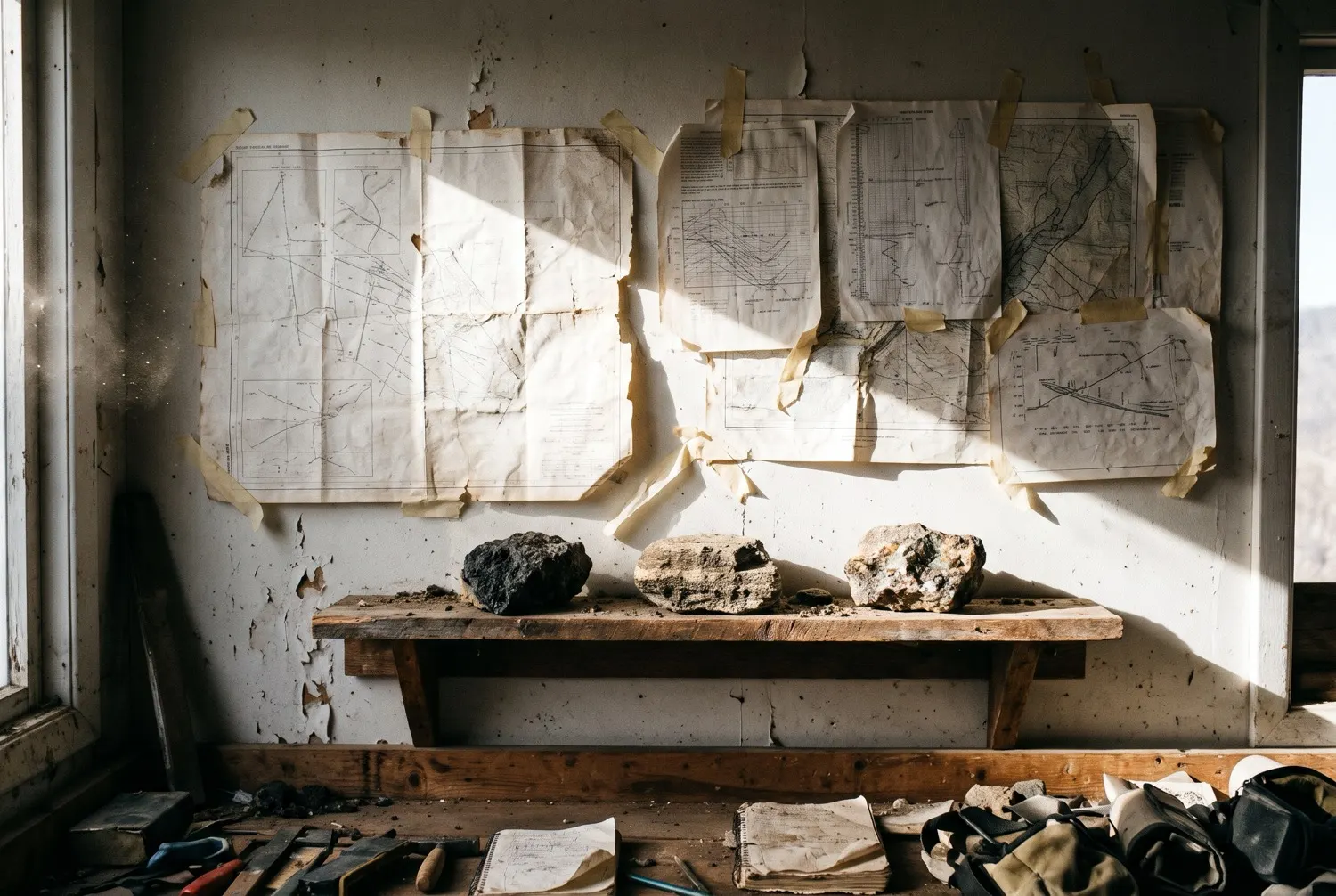
A road cut is a piece of engineering that accidentally publishes geology. The crews remove a hillside, and what is left is a vertical slice showing forty million years of deposition in one glance. The desk borrows the method. We take a story that arrives as a single event and slice down through the paperwork beneath it until the layers stop moving.
Why layers instead of angles
Angle reporting asks who benefits. Layer reporting asks what has to be true for the event to happen at all. A four-hour queue at a commercial crossing can be covered as a staffing failure, a security decision, or a political gesture. All three readings are available on the day. Only one of them survives contact with the operating bulletin and the staffing roster, and that is the one the desk files.
The key has three entries. Surface is the event: a lane closed, a fee changed, a shipment held. Terrace is the machinery that makes the surface repeat: permits, quotas, renewal calendars, staffing formulas. Bedrock is what the machinery cannot contradict: statute, treaty article, compact, and the reported opinions that interpret them. The three are not equally newsworthy. They are equally necessary.
Four moves before publication
1. Open the document behind the announcement
Announcements summarize. The document decides. When a district office issues a notice about inspection hours, the desk pulls the underlying staffing plan and the collective agreement that sets shift minimums. The notice and the plan rarely match, and the gap is the story.
2. Stamp the layer on the draft
Every draft carries a one-line note at the top: which layer the claim sits in, and which document proves it. If the note cannot be written, the draft goes back to reporting. This is not bureaucracy for its own sake. It stops a terrace story from being sold as bedrock, which is the most common error in continental coverage.
3. Check the calendar, not only the quote
Officials describe decisions as recent when the paperwork is older. A renewal that takes effect in March was drafted in November. A quota that resets in October was negotiated in the spring. The desk dates the decision from the filing, not from the press conference, and says so in the item.
4. Leave a route back
Each item names the office, the register and the date a reader would need to find the same page. Where a document is not online, the item says where the paper copy sits and what it costs to request it. A claim that a reader cannot trace is a claim the desk does not make.
What the desk will not do
It will not forecast. Continental systems move on filing dates, and a forecast is a guess wearing a date. It will not use unnamed officials to carry a factual claim that a document could carry instead. It will not treat a queue as evidence of policy without the staffing record that explains the queue.
It also will not chase a story across four time zones in one day. The desk publishes when the layer is confirmed, which is sometimes a week after the event. That lag is the price of the method, and it is paid deliberately.
How a correction is filed
A correction is dated, placed at the top of the item, and written in the same voice as the original. It names what was wrong, what is right, and which document settles the difference. Substantive corrections are never folded into the text without a note. The desk keeps a copy of every corrected draft for two years, because the record of a mistake is part of the record of the beat.
The same key applies to reader submissions. Send a document with a page number and a date, and it enters the queue at the same place as a staff filing. Send an opinion and it goes to the letters pile, which the desk reads but does not treat as evidence.